
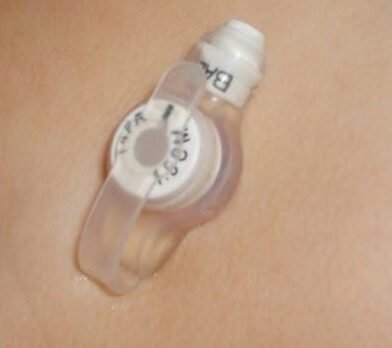
MIC-KEY gastrostomy button
When a Wound Is More Than a Wound
The story of Imani’s infected gastrostomy, blood clots, and the fear we still carry.
Some memories don’t stay with you as images. They return as feelings. A tightness in your chest. A breath you forgot to let out. Fear that doesn’t really leave, even when the crisis is over.
What I’m about to share is a chapter that still lingers with us. It was a time of helplessness, frustration, and raw fear. A time that reminded us just how thin the line is between stability and chaos.
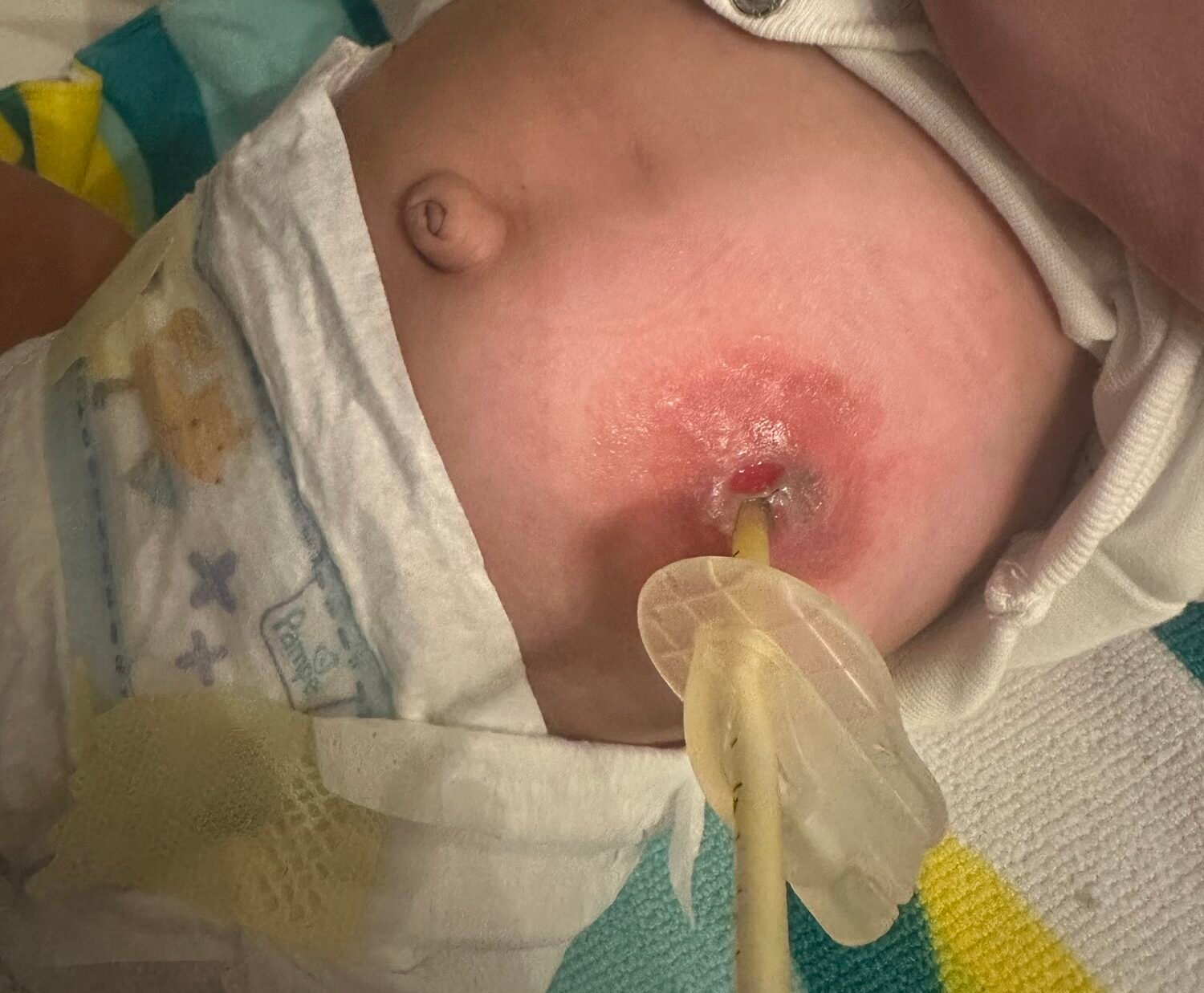
Imani’s gastrostomy kept getting infected. Over and over again. She was prescribed antibiotics each time, but the wound never truly healed. It looked painful, red and inflamed. And often, the small balloon inside the tube would slip out, especially if she cried hard or vomited, because the opening no longer sealed properly around the tube.
I was exhausted. Wound care became a battle, every single time. What frustrated me most was that we had already gone to the hospital so many times about this, and yet, here we were again. After an exam, the doctor said Imani needed to be admitted. She was to stop all feeding so her stomach could remain empty, allowing the wound to heal. Gastrostomy aren’t stitched closed, they need to heal naturally, from the inside out.
After about a week in the hospital, the wound seemed to be improving. But as soon as we started feeding again through the tube very slowly, using a pump at just 10ml per hour, things got worse again. Imani had already lost weight. She didn’t have any reserves left.
The team decided to place a central venous catheter so she could start on TPN (total parenteral nutrition), feeding her directly into the bloodstream. She was taken to the OR. These lines are placed under general anesthesia in sterile conditions, to prevent infection. I waited. A long time. When the doctor finally came out, his face said enough. He told me they had a hard time. They couldn’t access her neck veins. Not on the left. Not on the right.
I was shocked. No one had warned me. I knew that during her NICU stay, Imani had developed clots around her central lines. But when she was discharged, both veins had been checked via ultrasound and confirmed open. Now, they told me that her body had already developed new, smaller blood vessels around her neck, taking over the job of the blocked ones. They had to place the line in her femoral vein, in her groin.
At last, Imani could receive nutrition. But my worry only deepened. Would this affect her long-term? The team started a full blood workup to investigate why she clotted so easily. In the meantime, she received daily Clexane (a blood thinner) to keep the new catheter open.
Slowly, she began gaining weight. Her wound started to heal. We let ourselves hope.
Until day 14, when they needed to draw blood again to check her coagulation levels. This time, they couldn’t draw anything from the central line. I remember looking at the nurse and whispering, “It’s not clotted again, is it?” They ordered an ultrasound just to be sure.
And there it was. Blood clots not just in one spot, but in her renal veins, and along the entire line where the catheter had been placed. She was rushed to the ICU and started on continuous heparin to break down the clots. The doctors explained that if a clot breaks loose, it can travel to the lungs and cause a pulmonary embolism.
I was terrified. I turned to my husband and said, “This can’t be the end, right?” It felt like the NICU all over again. Like we were back in that nightmare. Why did everything always have to go wrong?
It was always difficult to place an IV on Imani. Her veins were so delicate, it often took multiple attempts. To place an IV, they needed four nurses to hold her still. I had to leave the room. I couldn’t handle hearing her scream like that. I felt helpless. Powerless.
After two nights, she was stable enough to return to the regular floor. Her Clexane dose was increased to therapeutic levels, and she was closely monitored. In the middle of all this, they decided to switch her to a MIC-KEY gastrostomy button instead of the standard gastrostomy tube. It was far less traumatic for her skin and it worked. Her gastrostomy finally healed.
I was relieved. But I was also furious. Why hadn’t they done this sooner? Why does something always have to go wrong before the right decision gets made?
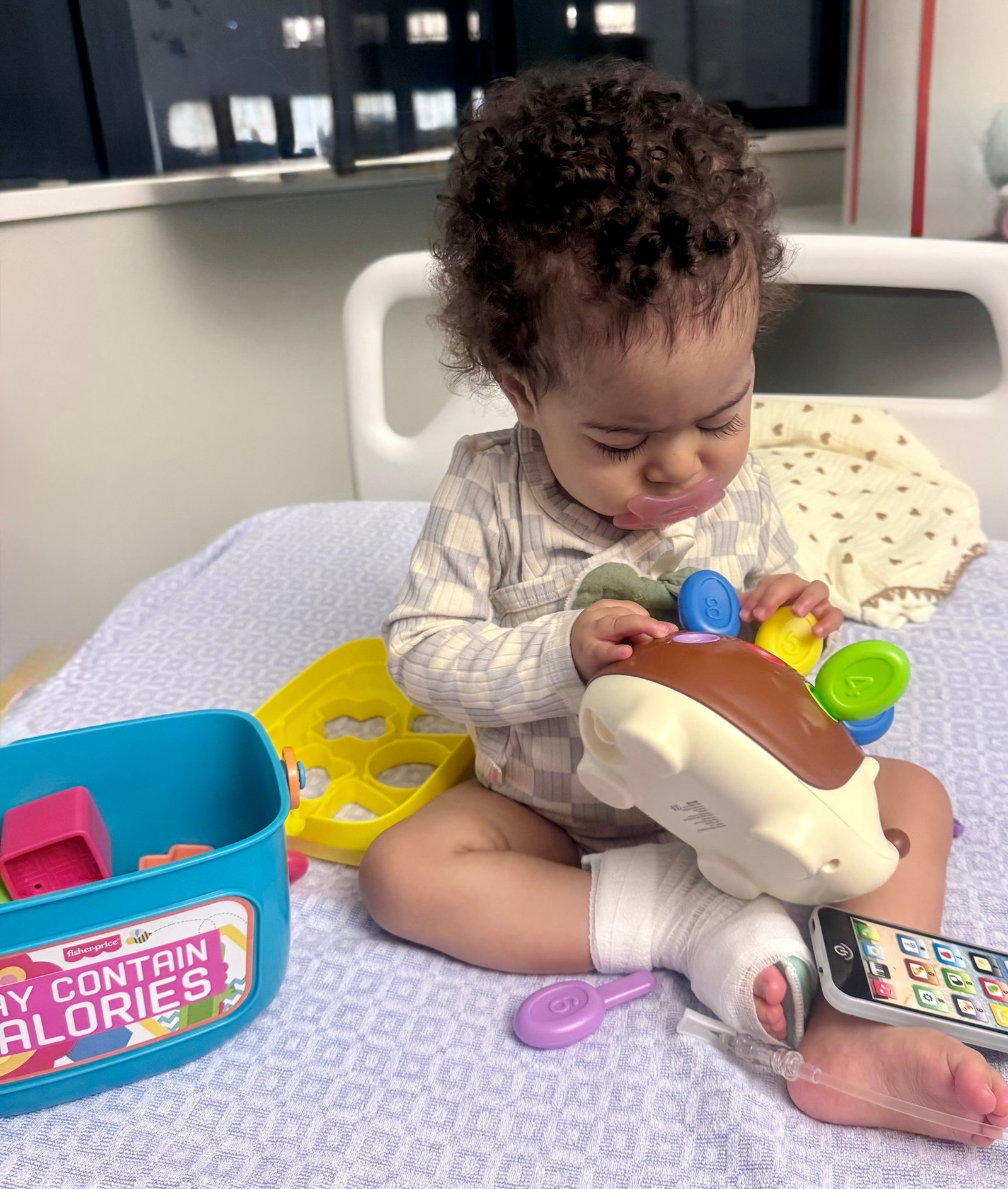
After three weeks in the hospital, we were finally allowed to go home. Since then, her gastrostomy has remained clean and infection-free. All thanks to that small button.
Imani is still on blood thinners while we wait for the lab results from her clotting profile. The clots are still there, but the vein is partially open. Her body has already created alternative pathways to bypass the blocked area. The clots in her renal veins are no longer visible. That alone is a miracle.
Now, we wait. We hope. That the clots don’t grow. That they dissolve. And that, somehow, she gets to just… be a child again.